How Natural Leaveners Helped Gold Rush Women Adapt to the American West
This project was a semester-long research endeavor for HIST 392: Seminar on Historical Methods. It explored the historical significance of naturally leavened bread among Euro-American women in gold mining regions of the American West (1846-1876). Inspired by the work of historians like Donna Gabaccia, Jennifer Wallach, and Ken Albala, my research aimed to join the ranks of all those who have sought to answer the question: ‘If we are what we eat, who are we?’
This research asked how natural leaveners helped these women adapt to new lifestyles in unfamiliar environments, and found that breadmaking facilitated female friendships, upheld gender roles, and recreated cultural notions of civilization. With methods from food history, women’s history, and environmental history, this project used an interdisciplinary approach to explore the enduring significance of breadmaking as a human experience.
Emma Kaiser
I conducted extensive research using digital archives, online databases, and library holdings to identify references to natural leaveners and breadmaking in women’s primary sources. Among the most valuable resources were the California Digital Newspaper Collection, Alexander Street’s North American Women’s Letters and Diaries Collection, and Gale’s Overland Journeys: Travels in the West, 1800-1880, which provided a wealth of firsthand accounts.
My research aimed to join the ranks of all those who have sought to answer the question: aimed to join the ranks of all those who have sought to answer the question: ‘If we are what we eat, who are we?’
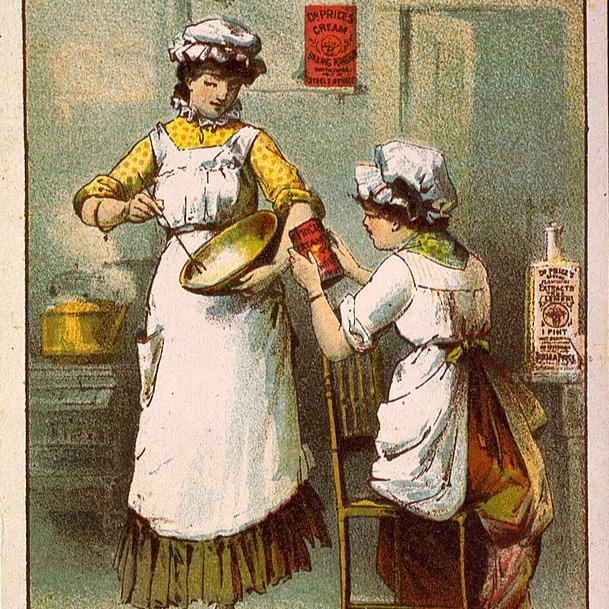
Steele & Price. Dr. Price’s Cream Baking Powder. Chicago & St. Louis, ca. 1870–1890. Library of Congress Prints and Photographs Division.
My research culminated in a mock NEH funding proposal that included, among other components, a comprehensive annotated bibliography and a detailed project narrative. Through this process, I gained valuable experience in formulating a focused research question, conducting original historical research, and preparing a professional grant application.
In a journal entry from June 21, 1857, a young woman named Mary “ Mollie” Dorsey Sanford took pride in her resourceful use of saleratus to leaven a cake as she scrambled to entertain some surprise visitors. Saleratus is an old word for sodium bicarbonate, or baking soda, and in this case was used to refer to the naturally occurring powder that collects in the sediment around the rim of alkaline lakes.
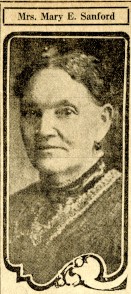
“Mrs. Mary E. Sanford,” Rocky Mountain National News (Daily).
Alkaline water sources are peppered throughout the American West and could be rimmed by several inches of natural saleratus, which immigrants would collect, sometimes by the bucket, to leaven their bread and sell to other travelers and miners.
When pressed to fulfill contemporary expectations of her gender, Mollie turned to the resources of her environment to help her (and her cake) rise to the occasion. As a form of leavened bread, a means of connecting with her environment, and a central component of a familiar meal, Mollie’s saleratus-leavened cake and the pride in her own capability it inspired are key pieces of evidence for this project’s findings.